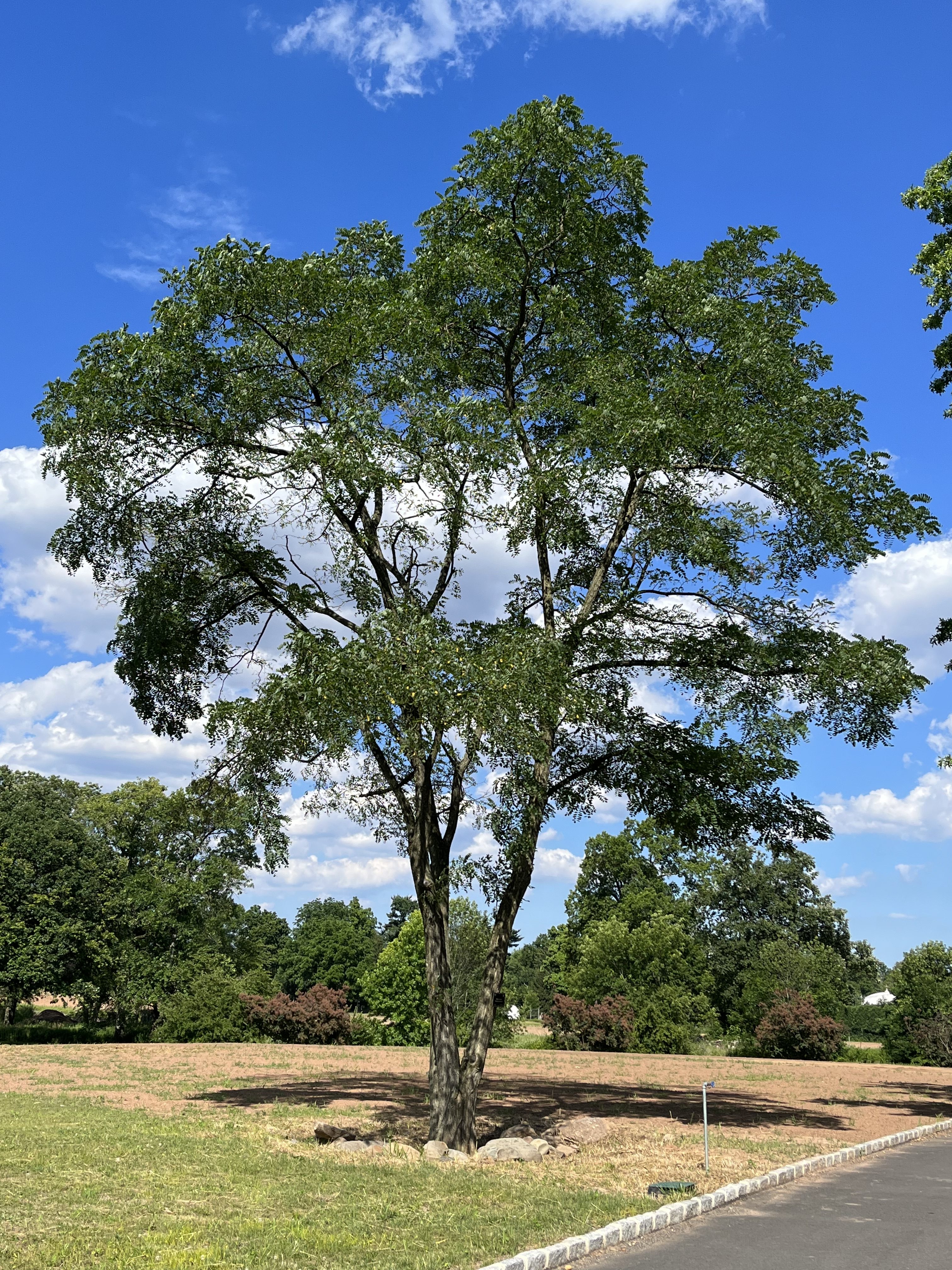
#97
Accession Number: 0097-0000
Common Name: Black Locust
Latin Name: Robinia pseudoacacia
Family: Fabaceae (Legume Family)
Native Range: Eastern and central United States
Height: 30–50 feet
Spread: 20–35 feet
Bloom Time: May to June
Bloom Description: White
USDA Hardiness Zone: 3
Light Preference: Full sun
Water Needs: Dry to medium
Notes: Works well as a flowering tree, to naturalize; fruit is showy; tolerates deer, drought, clay soil, air pollution
Description: Black Locust is a medium sized, deciduous tree originally native to the Allegheny Mountains, although it has naturalized over much of the United States and southern Canada (as well as parts of Europe, Asia, and South America). Ideal specimens grow as a single-trunked tree, although the species is prone to suckering, and can grow in thickets. It has attractive, fine, compound leaves and produces hanging clusters of fragrant, white, wisteria-like flowers in spring that attract bees. The flowers produce smooth, flat, purplish brown, bean-like pods. Seeds are poisonous to humans! The branches often bear long, sharp thorns. Leaves turn an unremarkable yellow in fall. Easy to grow, Black Locust thrives in many growing conditions; however, it can be tricky in landscapes due to its suckering habit, and it is susceptible to borers and other insect pests.
