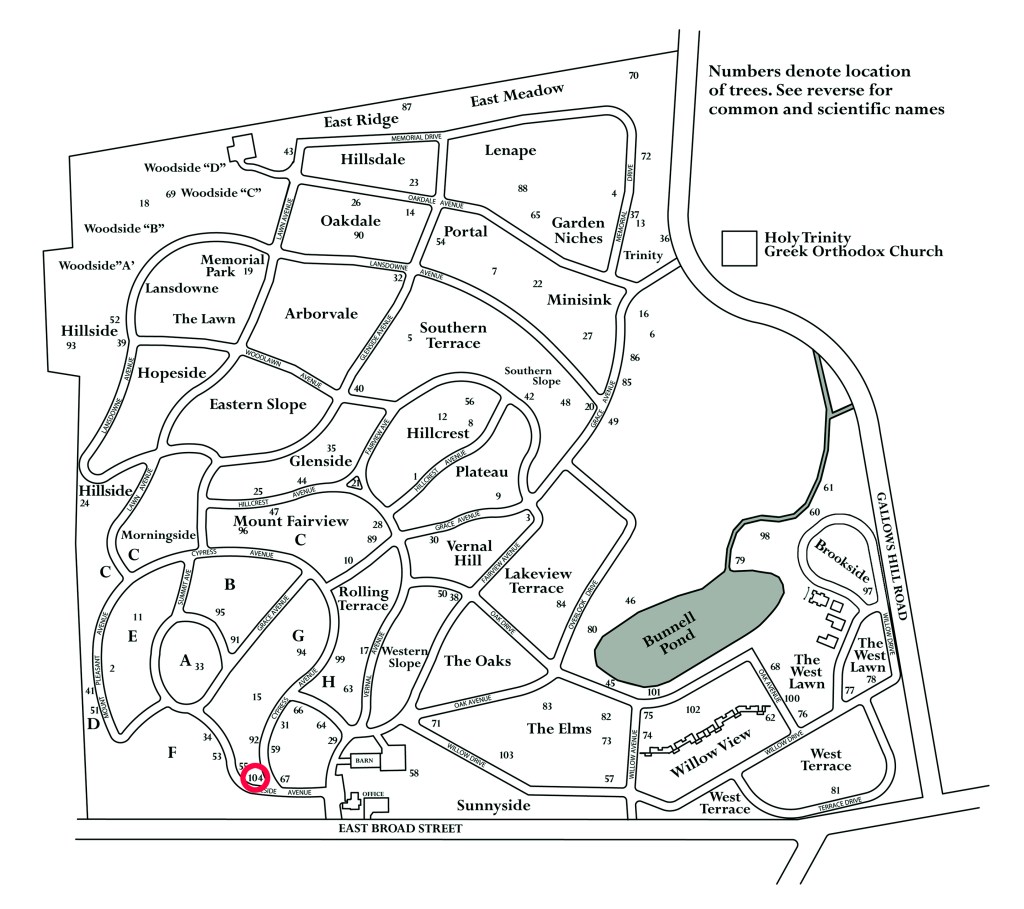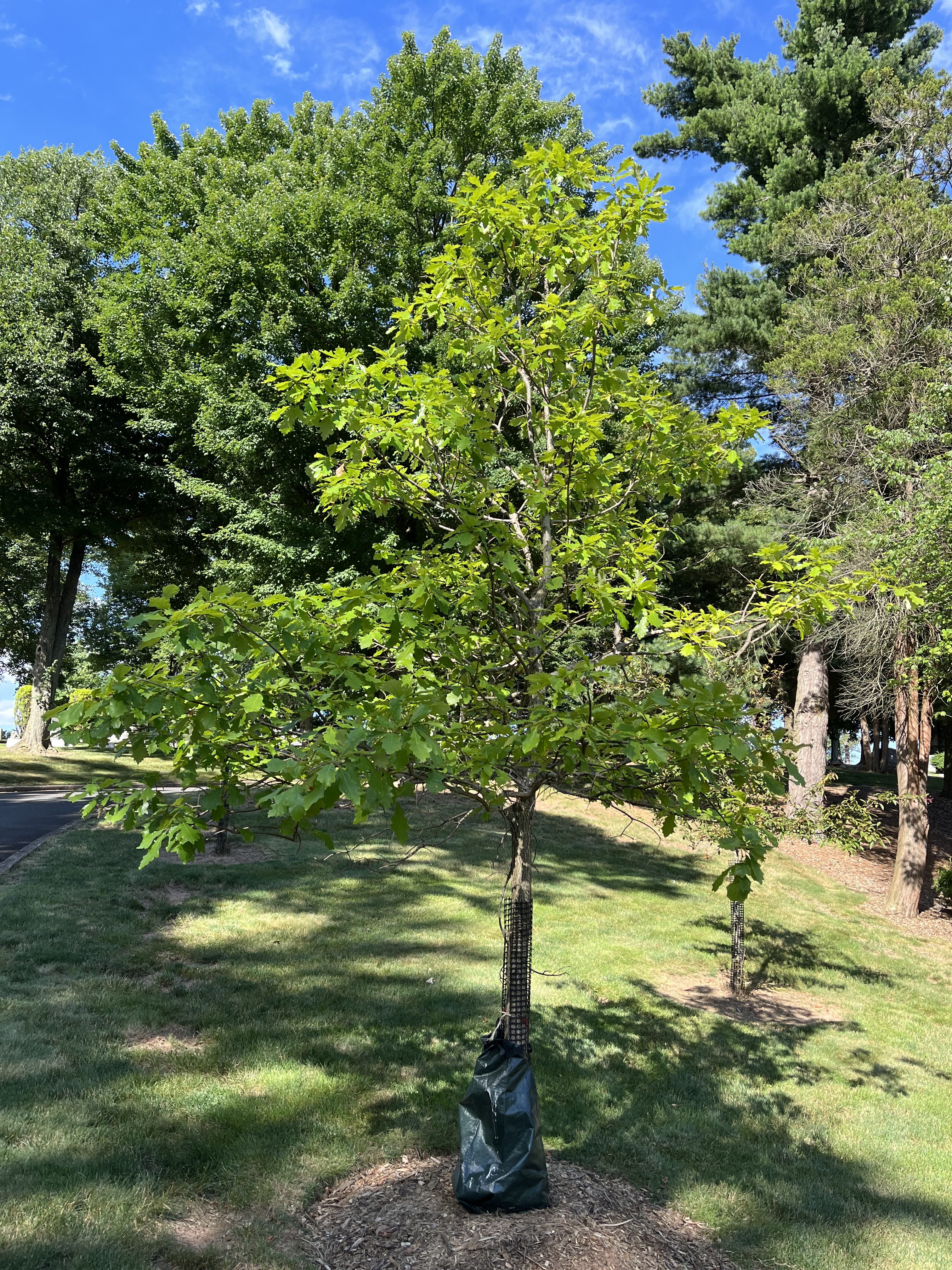
#104
Accession Number: 0104-2022
Common Name: Overcup Oak
Latin Name: Quercus lyrata
Family: Fagaceae (Beech Family)
Native Range: Central and Southern United States
Height: 40–60 feet
Spread: 40–60 feet
Bloom Time: April
Bloom Description: Yellowish-green, insignificant
USDA Hardiness Zone: 5
Light Preference: Full sun
Water Needs: Medium to wet
Notes: Works well as a shade tree and in low-lying areas; tolerates clay soils, wet soils, and occasional flooding.
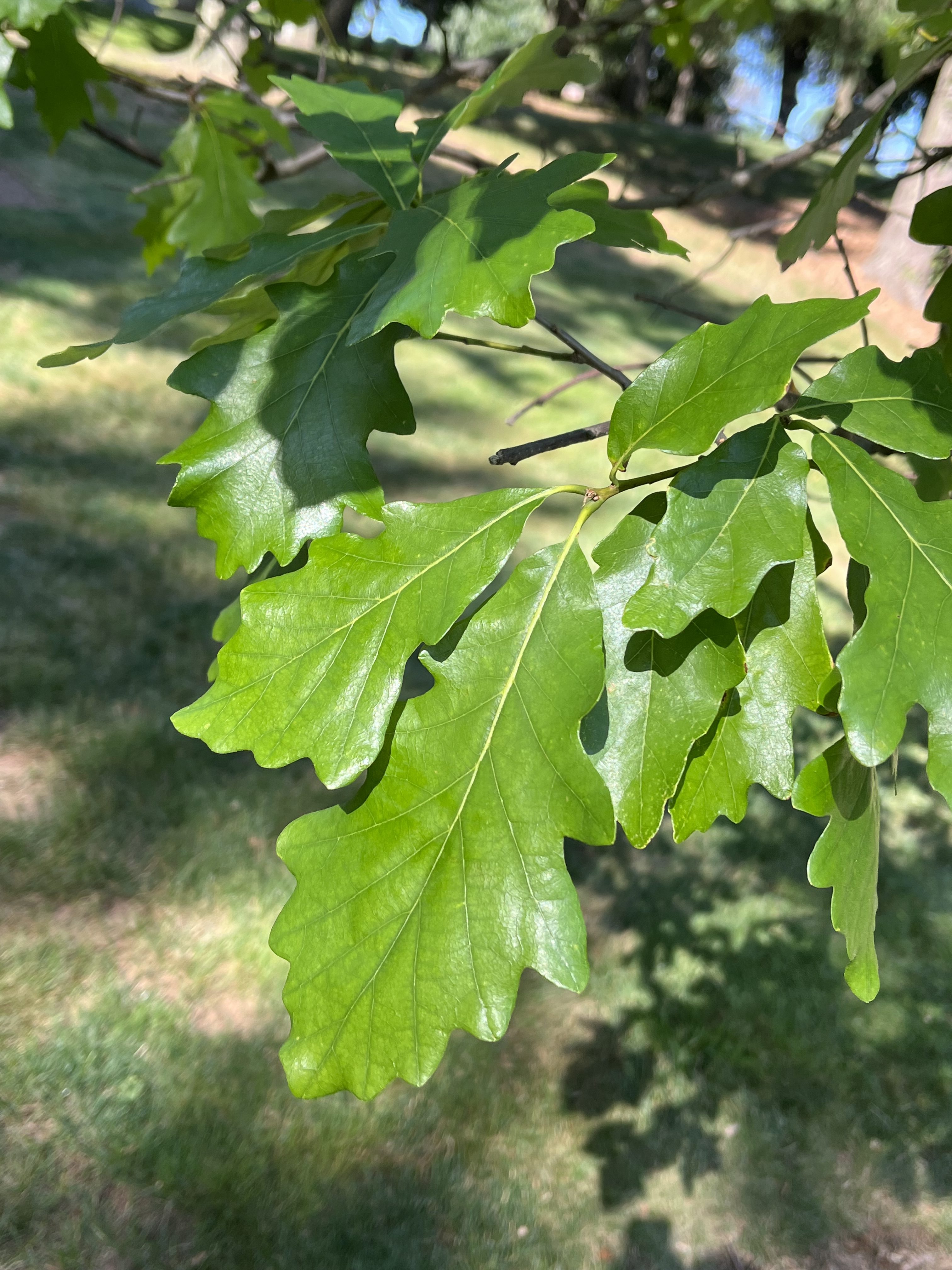
Description: Overcup Oak is a medium sized tree that takes its names from various features. The common name refers to the interesting acorns, whose bumpy, burr-like caps extend down, enclosing almost the entire nut. The Latin species epithet, lyrata, refers to the lyre-like shape of the leaves. Often found in floodplains and along swamps in the southeastern United States, the tree is very tolerant of wet sites and does best in moist, acidic soils. It typically grows straight with a broad, round crown. Compared to many oaks, Overcup is not particularly susceptible to many insects and diseases. Fall color is shades of yellow to brown, sometimes with orange and red. Overcup oaks do not fruit until maturity, so often produce no acorns until they reach about 25-30 years in age.